
Park at a Glance
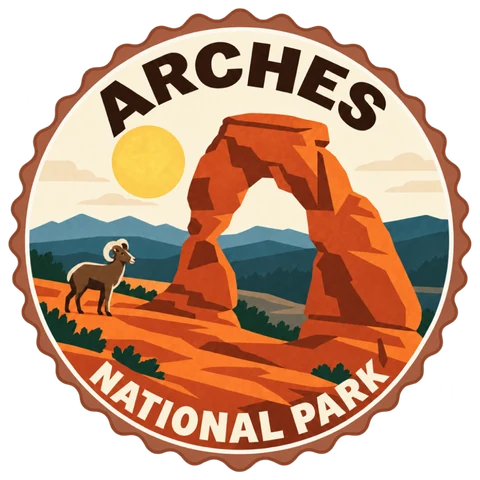
Near Moab in southeastern Utah, Arches National Park protects high desert on the Colorado Plateau. Its natural arches belong to a wider landscape of narrow rock walls, spires, and canyons.
What This Park Preserves
The park preserves sandstone formations alongside desert habitats and cultural places. Rock art, stone tools, and historic ranch structures record human relationships with this landscape, while protected soils and scarce water sustain its living communities.
How This Place Was Protected
President Herbert Hoover established Arches National Monument on April 12, 1929, to protect distinctive sandstone formations for their educational and scenic value. After several boundary changes, Congress replaced the monument with Arches National Park on November 12, 1971. A later boundary expansion, on October 30, 1998, added Lost Spring Canyon without changing the park’s name or designation.
Story of the Land
Deeply buried salt pushed upward, cracking the sandstone above into parallel lines. Erosion exposed those layers, and water widened fractures into narrow walls called fins. Rain and freezing water gradually weakened parts of the fins, opening holes through the rock.
People & Culture
Hopi, Zuni, Ute, Paiute, and Navajo communities have enduring connections to this land. The Wolfe family’s surviving 1906 cabin tells a later story of cattle ranching along Salt Wash, where water supported livestock and a garden.
Wildlife & Nature
Much of the apparently bare ground is alive. Communities of cyanobacteria, lichens, mosses, and other organisms form biological soil crust. This fragile layer binds sand, holds moisture, and supplies nutrients that help grasses and shrubs survive.
What to Look For
Compare intact rock fins with walls pierced by openings to trace stages of erosion. Look for smaller honeycomb cavities in sandstone, too. Red and greenish layers reveal different chemical states of iron within the rock.
Trails in Arches.
Explore 21 routes from the Park Passport Journey catalog. Find a signature hike, filter by difficulty or distance, and preview the route before your visit.
Explore all 21 Arches trailsSeasons and access at Arches.
Spring
April and May bring mild days and cool nights.
Summer
Intense heat and possible flash floods complicate summer visits.
Fall
Mid-September through October offers milder daytime temperatures.
Winter
Cold weather and ice can restrict roads and trails.
These are general seasonal patterns. Check the official park website for current access, closures, and visitor requirements.
Four things to know about Arches.
Your parks, in one digital passport.
Use Park Passport Journey to scan and digitize your paper passport stamps. Keep your stamp images, park visits, and photos together, then turn your memories into a customizable scrapbook, postcard, or Instagram-ready visual.
Confirm stamp locations and availability with the park before your visit.