
Park at a Glance
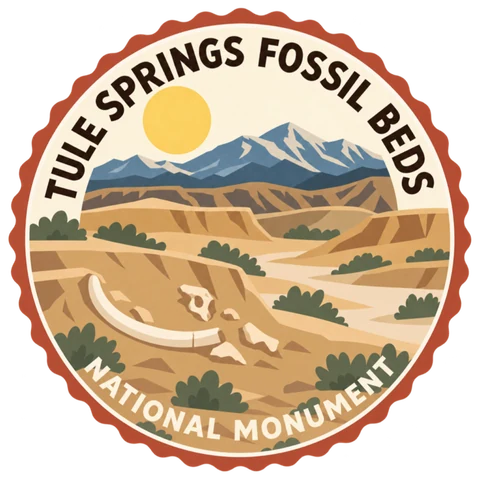
Tule Springs Fossil Beds National Monument stretches along the upper Las Vegas Wash in Nevada. Its open desert landscape connects fossils, changing climates, and living Mojave communities.
What This Park Preserves
Much of the fossil record remains in place. Staff monitor exposed remains because wind, water, and sunlight can damage both bones and surrounding sediment. The eroding landscape itself helps scientists reconstruct environments that disappeared long ago.
How This Place Was Protected
Parts of today’s monument received protection in the Nellis A, B, and C and Quail Springs Wilderness Study Areas in 1981. Congress released these areas on November 6, 2002. BLM withheld conservation lands from sale in 2004. Eglington Preserve followed in 2005, before BLM established the Upper Las Vegas Wash Conservation Transfer Area on October 21, 2011. Congress replaced that designation with Tule Springs Fossil Beds National Monument on December 19, 2014, transferring administration to NPS.
Story of the Land
Springs once fed wetlands here as groundwater rose and fell with climate. Their layered deposits became the Las Vegas Formation. Today, erosion exposes those sediments beneath a dry landscape framed by mountains.
People & Culture
This is part of the ancestral homeland of Nuwu/Nuwuvi people. Springs and their resources remain important to Southern Paiute communities, and archeological places retain cultural and spiritual significance alongside their scientific value.
Wildlife & Nature
Desert tortoises shelter in burrows where cooler, more humid air helps conserve water. Rare Las Vegas buckwheat and bearpoppy occupy a surviving habitat corridor increasingly surrounded by urban development.
What to Look For
Walk the Durango Loop to compare pale eroded badlands with modern desert vegetation and distant mountain ranges. Bring water: the monument has neither drinking water nor shade structures, and fossils must remain undisturbed.
Trails in Tule Springs Fossil Beds.
Explore 2 routes from the Park Passport Journey catalog. Find a signature hike, filter by difficulty or distance, and preview the route before your visit.
Explore all 2 Tule Springs Fossil Beds trailsSeasons and access at Tule Springs Fossil Beds.
Spring
Desert wildflowers accompany more comfortable walking temperatures
Summer
Extreme heat combines with unshaded, waterless trails
Fall
Cooling autumn days favor walks through open badlands
Winter
Milder afternoons follow potentially freezing desert mornings
These are general seasonal patterns. Check the official park website for current access, closures, and visitor requirements.
Four things to know about Tule Springs Fossil Beds.
Your parks, in one digital passport.
Use Park Passport Journey to scan and digitize your paper passport stamps. Keep your stamp images, park visits, and photos together, then turn your memories into a customizable scrapbook, postcard, or Instagram-ready visual.
Tule Springs Fossil Beds passport stamp guide
Confirm stamp locations and availability with the park before your visit.