Park at a Glance
Yellowstone National Park spans Wyoming, Montana and Idaho, protecting geyser basins, mountain lakes, forests and wildlife ranges around a vast volcanic plateau.
What This Park Preserves
Hydrothermal features share this landscape with migration routes, archaeological places and historic buildings. Protecting the park means caring for both spectacular springs and the ecological connections beyond its boundaries.
Becoming a National Park
The March 1, 1872 law immediately reserved Yellowstone National Park. The Army took charge on August 20, 1886; National Park Service rangers replaced it in 1918. Congress revised the boundaries on March 1, 1929. An October 20, 1932 proclamation added northern winter range, following 1926 authorization.
Story of the Land
Explosive eruptions formed a huge caldera, later partly filled by lava. Underground heat warms water circulating through fractures; different plumbing produces hot springs, geysers, mudpots and steam vents.
People & Culture
Many Tribes maintain connections to these lands through history, ceremony and traditional knowledge. Early park officials discouraged Tribal hunting and gathering, disrupting relationships that long predated the park.
Wildlife & Nature
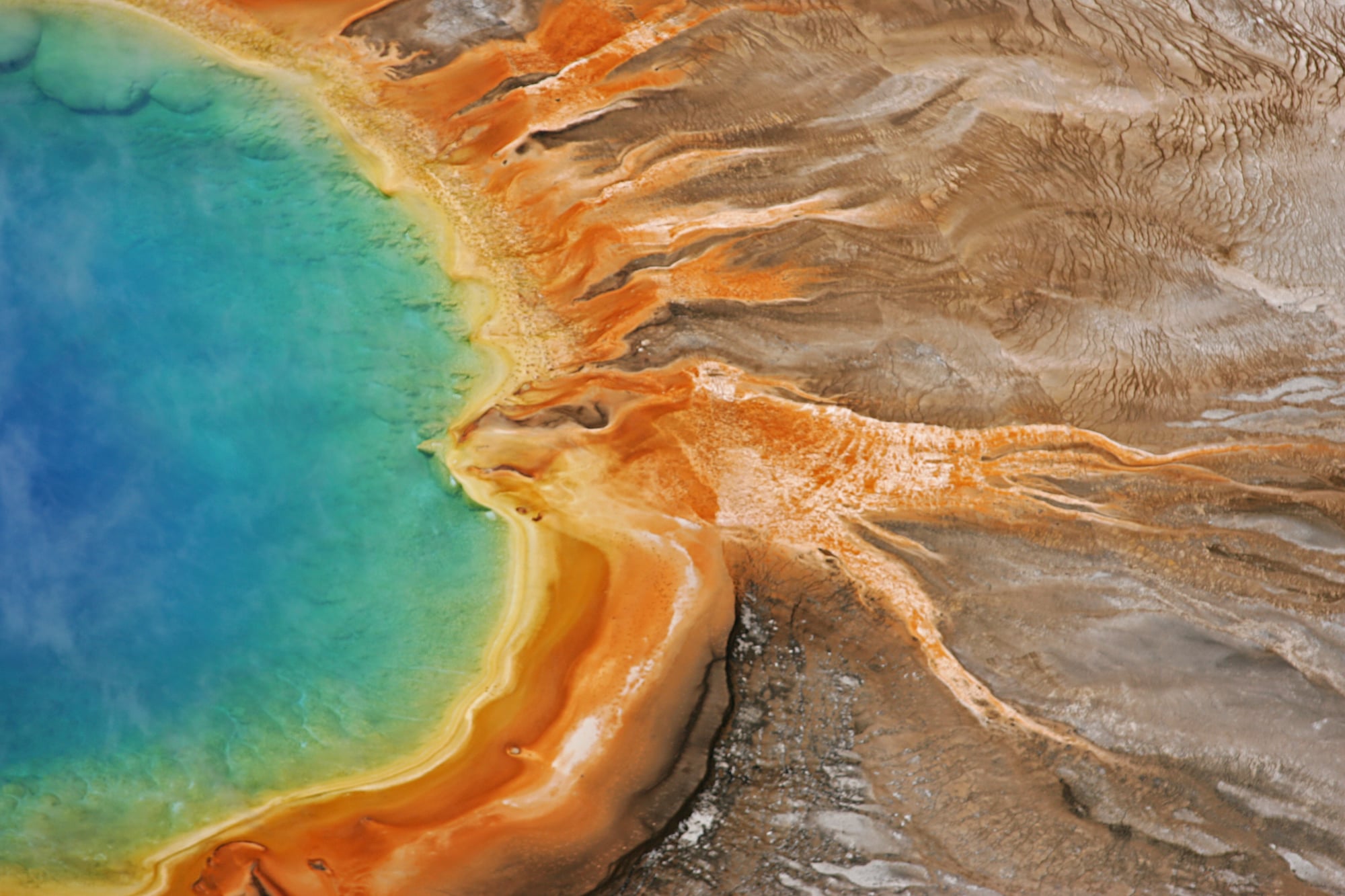
Lodgepole forests alternate with meadows and sagebrush country. Lower grasslands feed wintering elk and bison, while heat-loving microorganisms form colorful communities in thermal waters.
What to Look For
Stay on Mammoth’s boardwalks and compare wet, mineral-building terraces with dry ones. Look closely at orange and brown microbial mats: living communities help color a landscape that also builds new rock.
Explore Yellowstone on foot.
Three routes from Journey’s trail catalog. Distances and elevation gains are approximate; check each route’s NPS information before you set out.
When will you go?
Spring
Roads reopen gradually, but snow can still interrupt travel.
Summer
Broad road access supports exploring, while afternoons bring thunderstorms.
Fall
Cool days precede snow and seasonal road closures.
Winter
Severe cold and restricted roads require specialized planning.
These are general seasonal patterns. Check the official park website for current road access, closures, and visitor requirements.
Four things to remember.
Bring home a memory.
Make room in your passport for Yellowstone. Find the park’s stamp guide, then keep your stamp photos and visit memories together in Journey.
Yellowstone passport stamp guide