Park at a Glance
Spanning northern Arizona and southern Utah, the recreation area includes Lake Powell, surrounding canyon country, and Colorado River reaches below the dam. Escalante and San Juan tributaries extend its branching landscape.
What This Park Preserves
The park protects scenic canyons, fossils, springs, archeological sites, and historic river crossings while providing land and water recreation. Its surviving cultural places document farming, travel, mining, and enduring connections to this desert.
How This Place Was Protected
Glen Canyon National Recreation Area began under an NPS–Bureau of Reclamation agreement dated April 18, 1958, approved by both agencies later that year. The agreement was revised September 17, 1965. Congress established the recreation area in law October 27, 1972, retaining its name and the dam’s water-management purposes.
Story of the Land
The Colorado River and its tributaries cut through layered rocks, exposing records of ancient environments. Lake Powell began filling in 1963, flooding canyon habitats and cultural sites. Beyond the reservoir, erosion and spring water continue reshaping the land.
People & Culture
Ancestral Puebloan communities farmed canyon bottoms and built homes and storage rooms. Today, Hopi, Zuni, Navajo, Paiute, and Ute communities maintain cultural relationships with the region and participate in park consultation.
Wildlife & Nature
Sagebrush and blackbrush occupy dry ground, while spring-fed hanging gardens shelter maidenhair ferns and other moisture-loving plants. Bighorn sheep share this landscape with small desert mammals that conserve water and avoid daytime heat.
What to Look For
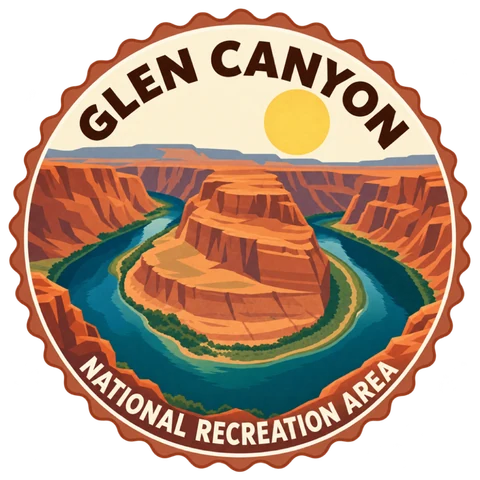
From Horseshoe Bend’s viewing platform, trace the Colorado River around its rock promontory. On the Hanging Gardens trail near Page, compare dry sandstone with the shaded seep; keep to the path beside fragile vegetation.
Trails in Glen Canyon.
Explore 19 routes from the Park Passport Journey catalog. Find a signature hike, filter by difficulty or distance, and preview the route before your visit.
Explore all 19 Glen Canyon trailsSeasons and access at Glen Canyon.
Spring
Comfortable days can turn windy and unpredictable
Summer
Extreme heat and monsoon storms limit desert outings
Fall
Milder weather favors hiking, with flash floods possible
Winter
Moderately cold days give way to freezing nights
These are general seasonal patterns. Check the official park website for current access, closures, and visitor requirements.
Four things to know about Glen Canyon.
Your parks, in one digital passport.
Use Park Passport Journey to scan and digitize your paper passport stamps. Keep your stamp images, park visits, and photos together, then turn your memories into a customizable scrapbook, postcard, or Instagram-ready visual.
Glen Canyon passport stamp guide
Confirm stamp locations and availability with the park before your visit.