
Park at a Glance
Great Smoky Mountains National Park crosses the Tennessee–North Carolina border, protecting Southern Appalachian forests, mountain streams, and places connected to Cherokee life, farming, logging, and conservation.
What This Park Preserves
The park protects forests shaped by elevation and slope, stream habitats, and historic farm buildings. At Oconaluftee's Mountain Farm Museum, most structures were moved from other park locations to represent regional farm life.
Becoming a National Park
Local advocates, state governments, and private donors assembled land from farms and timber companies. Congress authorized Great Smoky Mountains National Park on May 22, 1926. Initial land transfers established it for administration and protection on February 6, 1930. On June 15, 1934, Congress established it for full development. President Franklin D. Roosevelt dedicated it on September 2, 1940. Acquiring the land also displaced many families whose homes stood within the new park.
Story of the Land
Ancient sediments became rock, then continental collisions folded and fractured the layers and transformed some through heat and pressure. Erosion lowered the mountains; streams carved valleys and waterfalls where resistant rock outlasted softer layers.
People & Culture
Cherokee relationships with these mountains continue today. Through an agreement with the park, members of the Eastern Band of Cherokee Indians have gathered sochan, a leafy food plant, sustaining a tradition tied to their ancestral homeland.
Wildlife & Nature
Damp forests and streams shelter many salamanders. The park's lungless species exchange gases through their skin and the linings of their mouths and throats. Leaf litter, logs, and streamside rocks provide the moist places they need.
What to Look For
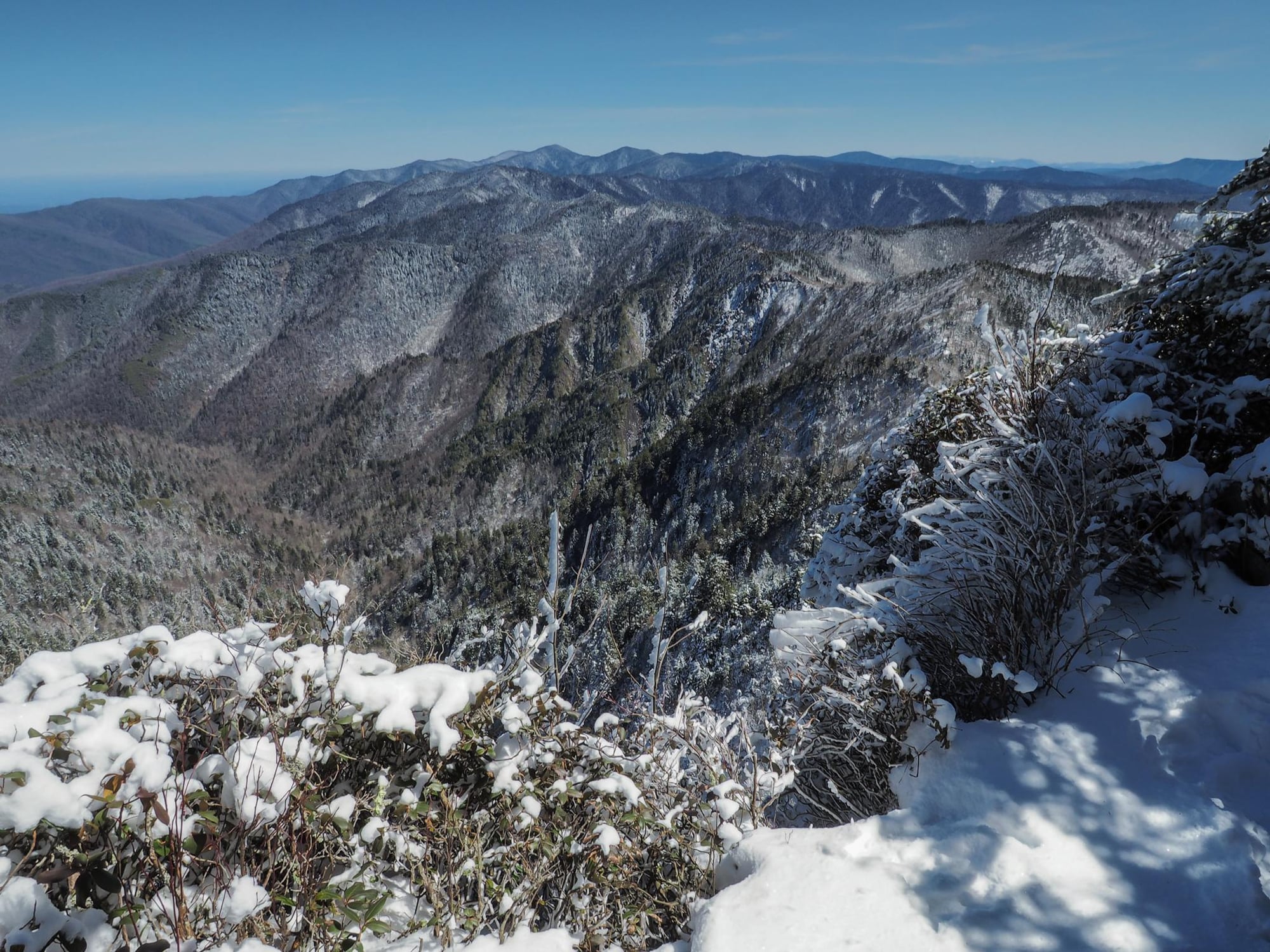
At Newfound Gap, notice the spruce-fir forest associated with higher, cooler elevations. At the Mountain Farm Museum, compare the house with separate food-storage buildings to see how a farm organized daily work and preserved provisions.
Explore Great Smoky Mountains on foot.
Three routes from Journey’s trail catalog. Distances and elevation gains are approximate; check each route’s NPS information before you set out.
When will you go?
Spring
Later spring warms valleys, while summits remain colder.
Summer
Humid lowlands and afternoon storms, with cooler summits.
Fall
Cooler, relatively dry days accompany changing leaves.
Winter
Mild valley spells contrast with snowy, cold summits.
These are general seasonal patterns. Check the official park website for current road access, closures, and visitor requirements.
Four things to remember.
Bring home a memory.
Make room in your passport for Great Smoky Mountains. Find the park’s stamp guide, then keep your stamp photos and visit memories together in Journey.
Great Smoky Mountains passport stamp guide