Park at a Glance
Yosemite National Park protects California’s Sierra Nevada scenery, from oak woodlands and waterfalls to high meadows, granite peaks and ancient sequoia groves.
What This Park Preserves
Its famous views belong to a larger living landscape. Caring for rivers, forests and cultural places connects the protection of spectacular scenery with the survival of less conspicuous resources.
Becoming a National Park
Congress granted Yosemite Valley and Mariposa Big Tree Grove to California for protection on June 30, 1864. The surrounding Yosemite National Park followed on October 1, 1890. Boundary reductions in 1905 transferred land to Sierra Forest Reserve. California offered its grant back on March 3, 1905; Congress accepted and incorporated it on June 11, 1906. Additions followed on April 14, 1930 and August 13, 1932. September 28, 1984 brought Yosemite Wilderness and Tuolumne Wild and Scenic River designation; Merced Wild and Scenic River followed on November 2, 1987. Ackerson Meadow joined through a September 7, 2016 donation.
Story of the Land
Granite cooled deep underground before uplift and erosion exposed it. Glaciers widened river-cut valleys into broad, steep-sided troughs, leaving tributary streams to spill from hanging valleys as waterfalls.
People & Culture
Local American Indian communities maintain living connections here. Behind the museum, the reconstructed Indian Village of Ahwahnee remains a place for ceremonies and gatherings, rather than solely a display of the past.
Wildlife & Nature
Giant sequoias have thick bark that helps them survive repeated fires. Their shallow, spreading roots depend on water, while seedlings need sunny openings and exposed soil.
What to Look For
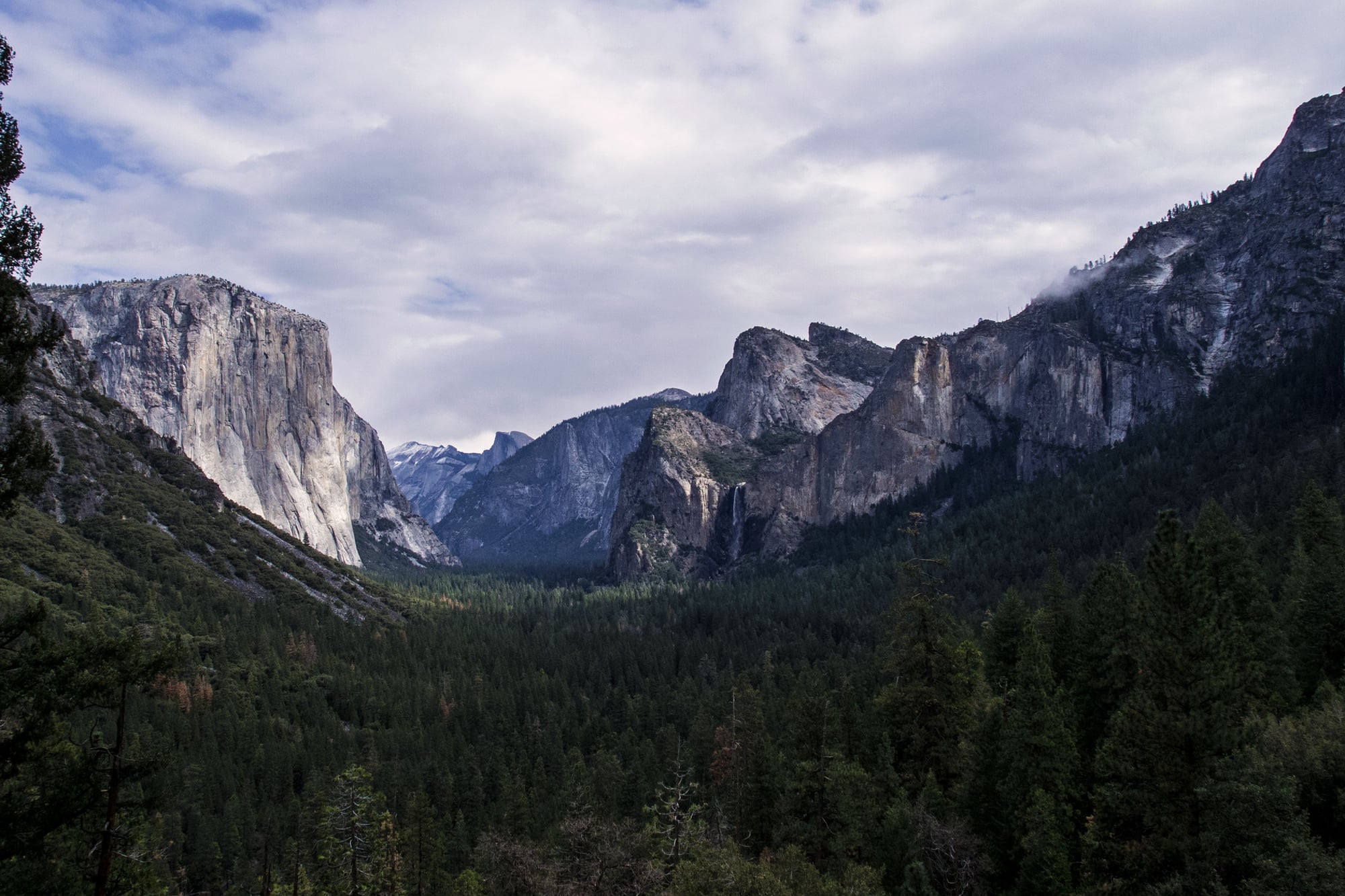
At Tunnel View, compare the valley’s broad floor with its steep walls. Follow Mariposa Grove’s Big Trees Loop to study bark and fallen wood without leaving the path or trampling roots.
Explore Yosemite on foot.
Three routes from Journey’s trail catalog. Distances and elevation gains are approximate; check each route’s NPS information before you set out.
When will you go?
Spring
Snowmelt feeds waterfalls while higher roads remain closed.
Summer
Broad access comes with heat, crowds and possible smoke.
Fall
Fewer visitors accompany low waterfalls and changeable weather.
Winter
Valley visits continue despite snow and high-road closures.
These are general seasonal patterns. Check the official park website for current road access, closures, and visitor requirements.
Four things to remember.
Bring home a memory.
Make room in your passport for Yosemite. Find the park’s stamp guide, then keep your stamp photos and visit memories together in Journey.
Yosemite passport stamp guide